Monsoon-Coat-Care-for-Dog-Prevent-Matting-Odour-and-Skin-Infections

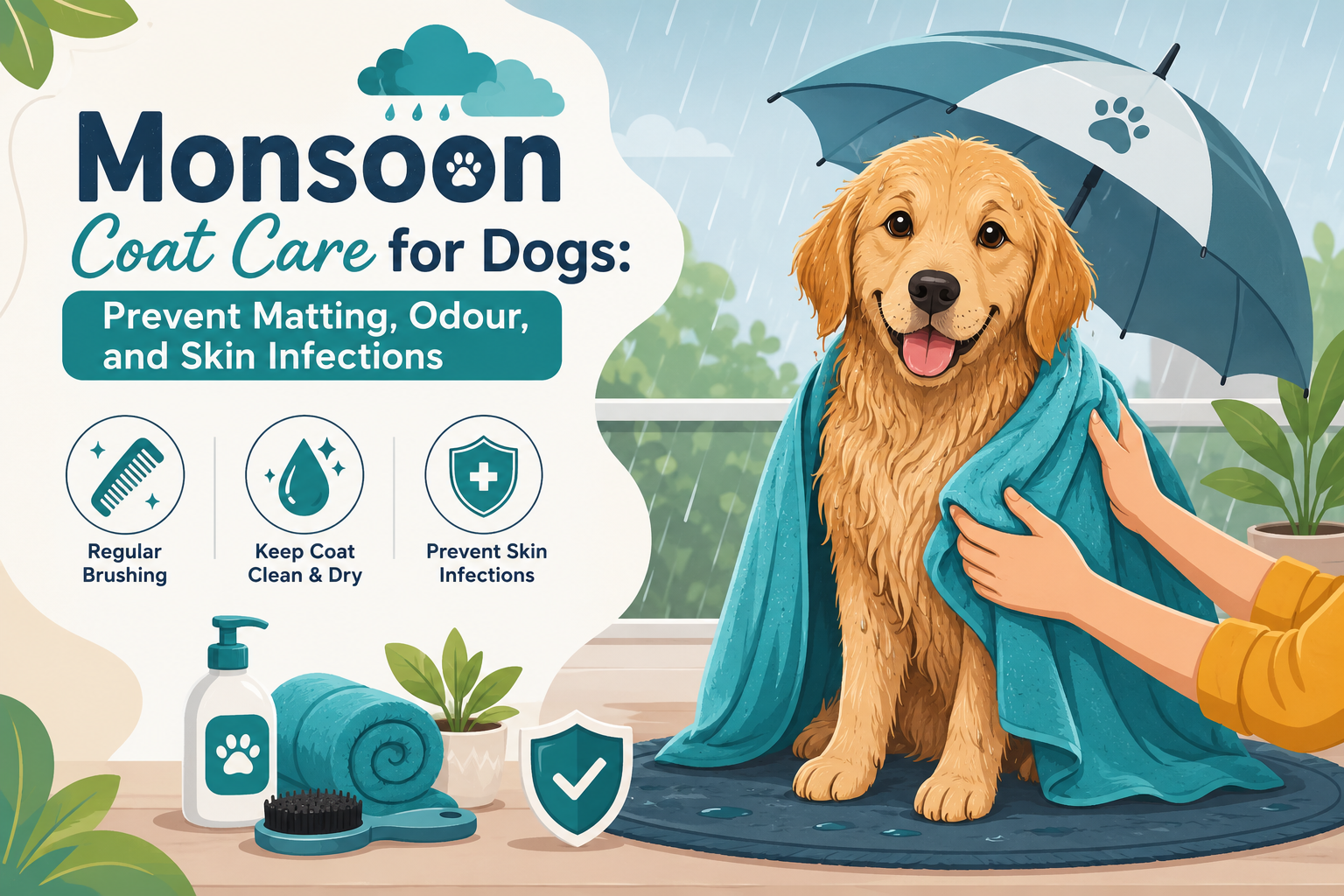
Monsoon Coat Care for Dogs: Prevent Matting, Odour, and Skin Infections

Introduction

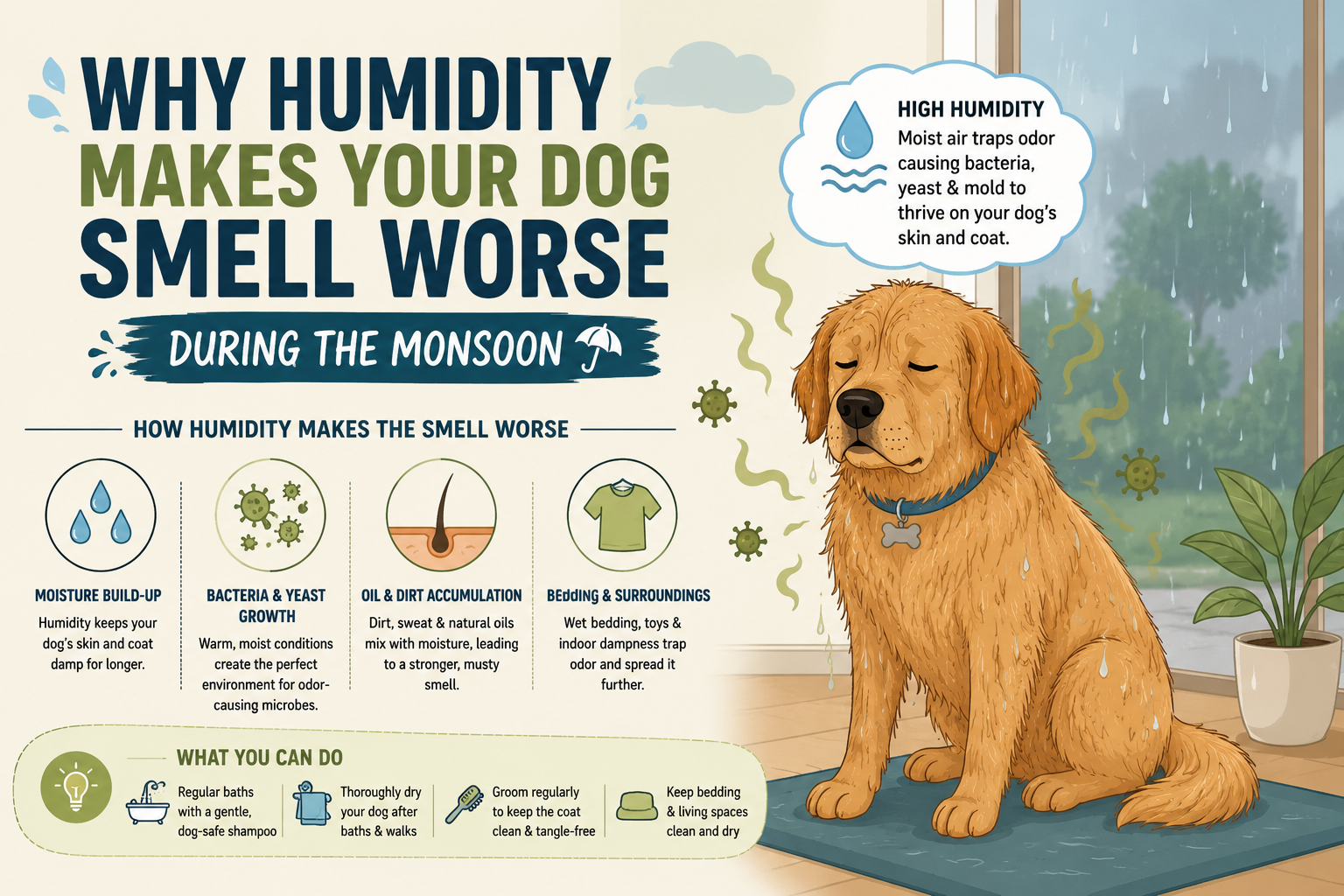
The monsoon season brings cooler temperatures and refreshing rain, but it also creates the perfect environment for moisture-related problems in your dog’s coat. Damp fur, muddy walks, high humidity, and poor drying habits can quickly lead to matting, unpleasant odours, fungal infections, and itchy skin.

Proper Monsoon Coat Care for Dogs is more than just keeping your pet clean—it plays a vital role in maintaining their overall health and comfort. Maintaining good pet hygiene during monsoon is equally important, as regular grooming, proper drying, and cleanliness help reduce the risk of skin infections, parasites, and unpleasant odours. With the right grooming routine and preventive care, you can help your furry friend enjoy the rainy season without discomfort.

Whether you own a long-haired Golden Retriever, a fluffy Shih Tzu, or a short-coated Labrador, following these expert grooming tips and prioritizing pet hygiene during monsoon will help keep your dog’s coat healthy, clean, and comfortable throughout the rainy season.

Why Monsoon Weather Affects Your Dog's Coat

During the rainy season, the combination of humidity and moisture creates ideal conditions for bacteria, fungi, and parasites to thrive.

Common monsoon coat problems include:

Coat Problem

Main Cause

Possible Risk

Wet fur

Rain and humidity

Bacterial growth

Matting

Damp tangled hair

Painful knots

Bad odour

Moisture trapped in coat

Skin irritation

Fungal infections

Constant dampness

Itching and redness

Hot spots

Poor air circulation

Skin inflammation

Fleas and ticks

Humid environment

Skin diseases

Ignoring these issues can make your pet uncomfortable and may require veterinary treatment.

Common Coat Problems During the Monsoon

1. Coat Matting

Wet fur easily tangles, especially in breeds with medium to long coats.

Signs include:

  • Hard knots in fur
  • Pain while brushing
  • Dirt trapped inside the coat
  • Reduced airflow to the skin

Matting also hides parasites and skin infections, making early detection difficult.

2. Bad Dog Odour

Dogs naturally produce skin oils. During humid weather, moisture mixes with these oils and bacteria, causing a stronger smell.

Common causes include:

  • Wet coat
  • Dirty paws
  • Damp bedding
  • Ear moisture
  • Infrequent grooming
3. Skin Infections

Excess moisture allows fungi and bacteria to multiply rapidly.

Symptoms include:

  • Red patches
  • Excessive scratching
  • Hair loss
  • Skin flakes
  • Sticky or moist skin
  • Constant licking

Prompt grooming and drying help reduce these risks.

Essential Monsoon Coat Care for Dogs

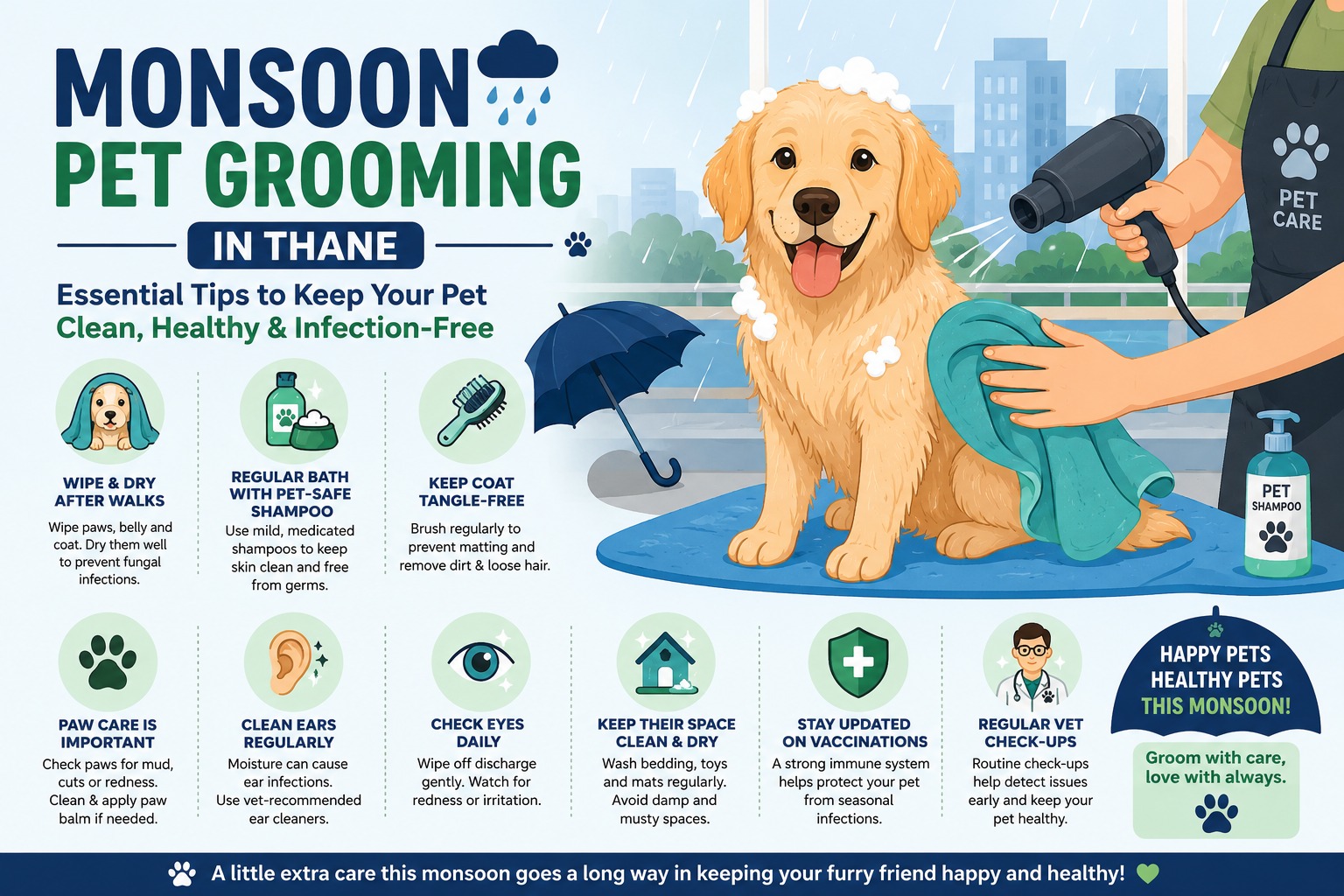
Dry the Coat Thoroughly After Every Walk

Never allow your dog’s fur to remain wet.

Use:

  • Microfiber towel
  • Pet-safe dryer on low heat
  • Soft grooming brush after drying


Pay special attention to:

  • Belly
  • Legs
  • Tail
  • Neck
  • Underarms
  • Between paw pads
Brush Daily

Daily brushing removes:

  • Loose hair
  • Dirt
  • Moisture
  • Small tangles
Benefits
  • Improves blood circulation
  • Prevents matting
  • Distributes natural oils
  • Keeps coat shiny
Trim Excess Fur

Long fur traps water much longer.

Professional trimming during monsoon:

  • Keeps dogs cooler
  • Prevents tangles
  • Makes drying easier
  • Reduces fungal risk

Avoid shaving double-coated breeds unless advised by a groomer.

Bathe Only When Necessary

Frequent bathing strips natural oils.

Instead:

  • Bathe every 3–4 weeks
  • Use moisturizing dog shampoo
  • Apply pet conditioner if recommended
  • Dry completely before letting your dog rest
Clean Paws After Every Walk

Mud carries:

  • Bacteria
  • Fungus
  • Parasites
  • Chemicals

Always:

  • Wash paws
  • Dry paw pads
  • Check for cuts
  • Apply paw balm if needed

Keep Bedding Dry

Your dog’s bedding collects moisture quickly.

Wash bedding weekly and ensure it dries completely before use.

Maintain Ear Hygiene

Dogs with floppy ears are especially vulnerable during monsoon.

Clean ears using a veterinarian-approved ear cleaner to prevent yeast infections and unpleasant odours.

Foods That Promote Healthy Skin and Coat

Nutrition is equally important for Monsoon Coat Care for Dogs.

Nutrient

Benefits

Sources

Omega-3 Fatty Acids

Healthy skin

Fish oil, salmon

Vitamin E

Skin repair

Eggs, spinach

Zinc

Strong coat

Meat

Protein

Hair growth

Chicken, turkey

Water

Hydration

Fresh clean water

Always consult your veterinarian before introducing supplements.

Grooming Routine for Monsoon

Grooming Activity

Recommended Frequency

Brushing

Daily

Paw Cleaning

After every walk

Ear Cleaning

Weekly

Bath

Every 3–4 weeks

Coat Trimming

Every 4–6 weeks

Flea & Tick Check

Weekly

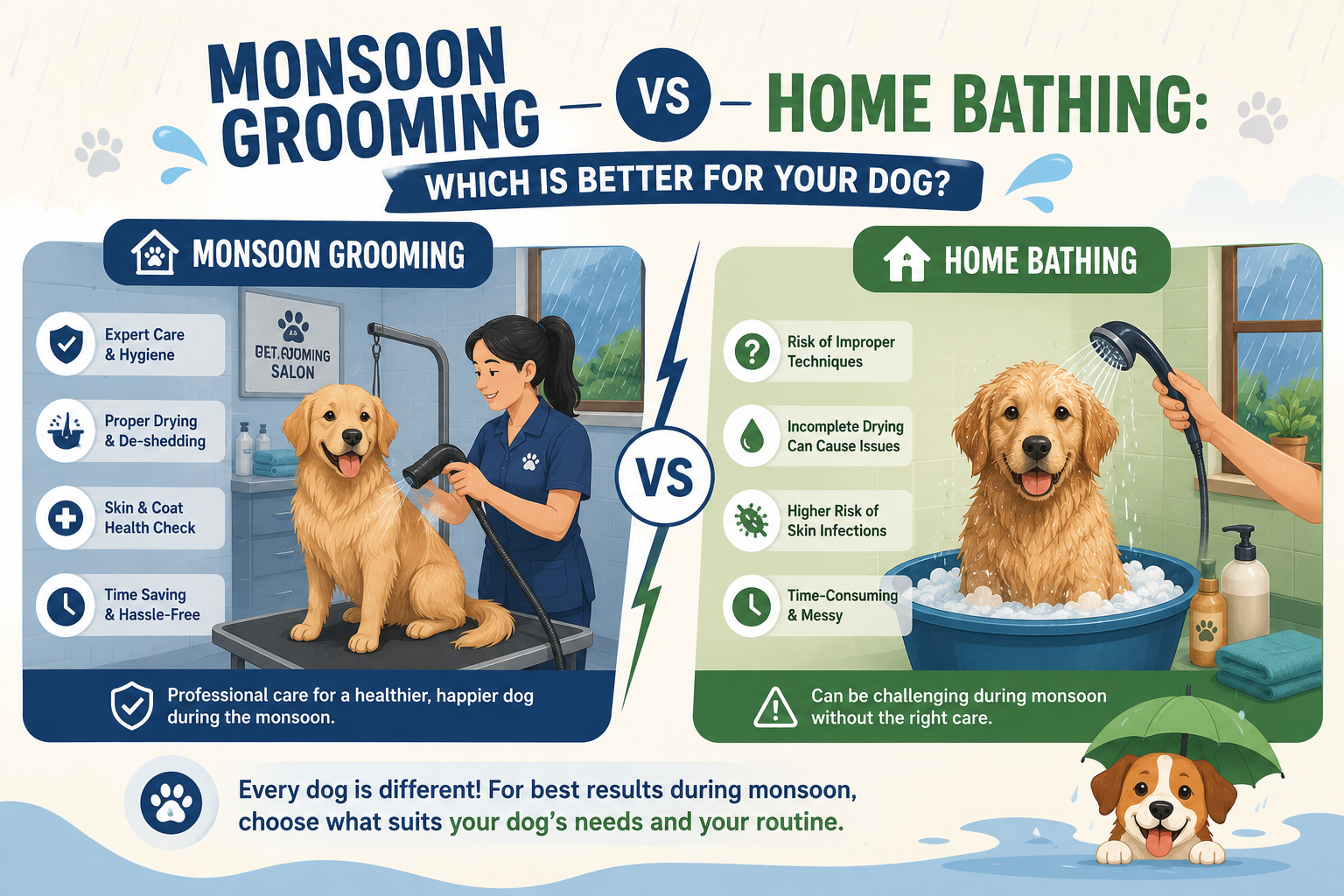
Professional Grooming

Every 4–6 weeks

Signs Your Dog Needs Professional Grooming

Consider professional grooming if you notice:

  • Persistent bad smell
  • Thick coat matting
  • Excessive shedding
  • Skin redness
  • Fleas or ticks
  • Tangled fur around ears and tail
  • Difficulty brushing at home

Professional groomers use specialized equipment that helps maintain coat health while detecting skin issues early.

Why Professional Grooming Matters During Monsoon

Professional groomers understand coat types and know how to maintain them safely during humid weather.

Services often include:

  • Deep coat cleaning
  • De-shedding
  • Coat trimming
  • Paw care
  • Ear cleaning
  • Nail trimming
  • Tick and flea inspection
  • Coat conditioning

Regular grooming reduces the chances of painful matting and hidden skin infections.

Monsoon Grooming Checklist

✔ Checklist

Status

Dry coat after walks

Brush daily

Clean paws

Check ears

Wash bedding

Inspect skin

Use flea prevention

Schedule grooming

Complete Monsoon Care Tips

Do’s
  • Keep fur dry
  • Brush regularly
  • Feed nutritious food
  • Maintain clean bedding
  • Visit professional groomers
  • Check skin weekly
Don’ts
  • Leave wet fur unattended
  • Skip brushing
  • Use human shampoo
  • Ignore unusual smells
  • Delay treatment for skin irritation
  • Let muddy paws stay dirty

Why Choose Bonbella Petcare?

When it comes to Monsoon Coat Care for Dogs, professional grooming can make a significant difference in preventing matting, odour, and skin infections. Bonbella Petcare provides experienced grooming services designed to keep pets clean, comfortable, and healthy throughout the rainy season.

Whether your dog needs a refreshing bath, coat trimming, de-shedding, nail trimming, or ear cleaning, the trained grooming team ensures gentle handling and personalized care based on your pet’s breed and coat type.

In addition to dog grooming, Bonbella Petcare also offers Cat grooming in Thane, making it a convenient destination for feline owners looking for professional coat care and hygiene services. If you’re away during the day or travelling, their cat day care in Thane provides a safe, clean, and comfortable environment where your cat receives proper attention and care.

For pet parents looking to pamper their furry companions, the Dog spa in Thane at Bonbella Petcare includes relaxing grooming treatments that help maintain a healthy coat, improve skin health, and keep your pet feeling fresh during the humid monsoon months.

Conclusion

The rainy season may be enjoyable, but it also demands extra attention to your pet’s grooming routine. Following the right Monsoon Coat Care for Dogs practices such as regular brushing, proper drying, paw cleaning, balanced nutrition, and timely professional grooming, can go a long way in preventing matting, unpleasant odours, and skin infections.

Staying proactive not only keeps your dog looking its best but also ensures better comfort, hygiene, and overall well-being. For pet owners seeking expert grooming solutions, Bonbella Petcare offers reliable services, including Dog spa in Thane, Cat grooming in Thane, and cat day care in Thane, helping your beloved pets stay healthy and happy all year round.

Frequently Asked Questions (FAQs)

Q1. Why is monsoon coat care important for dogs?

High humidity and frequent rain keep the coat damp, increasing the risk of matting, bad odours, fungal infections, and bacterial skin problems. Proper grooming helps prevent these issues

Q2. How often should I brush my dog during the monsoon?

Brushing your dog's coat daily is recommended during the rainy season to remove dirt, moisture, and loose fur while preventing tangles and mats.

Q3. How can I stop my dog from smelling bad during the rainy season?

Dry your dog's coat thoroughly after walks, clean their paws, wash bedding regularly, maintain ear hygiene, and schedule professional grooming sessions to minimize odours.

Q4.How often should my dog be professionally groomed during monsoon?

Most dogs benefit from professional grooming every 4–6 weeks, depending on their breed, coat type, and lifestyle.

Q5.Can wet fur cause skin infections?

Yes. Moisture trapped in the coat creates an ideal environment for bacteria and fungi, leading to skin irritation, itching, hot spots, and infections if left untreated.

Q6.What are the signs of coat matting in dogs?

Common signs include tangled fur, hard knots, discomfort while brushing, trapped dirt, reduced airflow to the skin, and excessive scratching.